October 04, 2021
The Benefits of the EU Tyre Label When Buying Tyres
Shopping for a new tyre but unsure of which one to buy? And your fave mechanic not as helpful as you'd like?
With petrol prices forever increasing, drivers like you constantly look for ways to save money at the pump.
No problem. Tyroola has done the homework for you! We put together individual tyre pattern pages with information for you to browse plus we've added the EU label to all our tyre products as well.
What is the EU tyre label?
What is a Fuel Efficient Tyre?
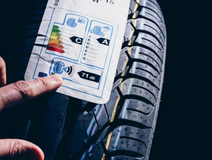
The EU tyre label is attached to all tyres sold in the EU. It's similar to the Nutrition Facts you'll find on a bag of chips or the information label on electronics and kitchen appliances.
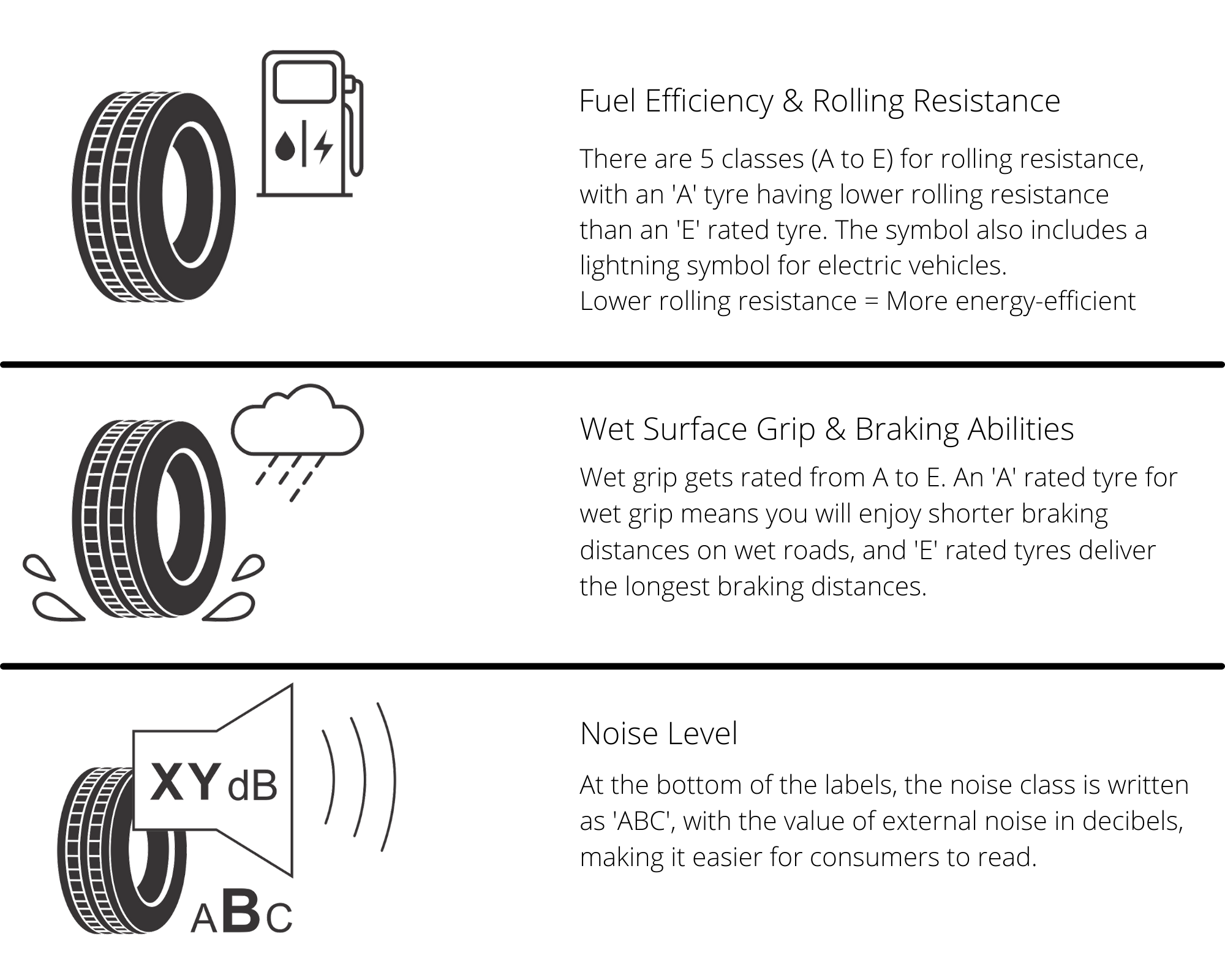
The label information on a tyre's performance will help shoppers like you make informed decisions, classifying each tyre based on:
1. Fuel Consumption & Efficiency
2. Noise Levels
3. Wet Braking Performance
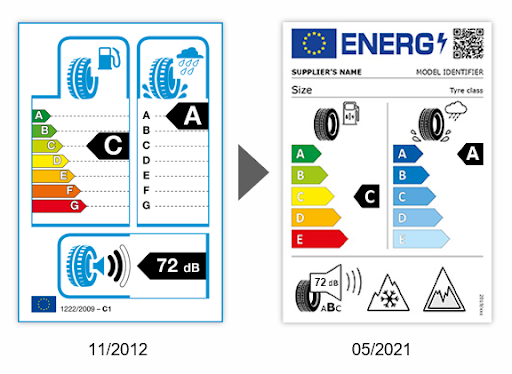
As of the 1st of May 2021, the EU officially enforced Regulation (EU) 2020/740, changing labels, which has looked the same since its introduction in 2012.
Spearheaded by the European Union and the ETRMA (European Tyre & Rubber Manufacturer's Association), the 2021 label revamp hopes to increase road safety and promote clean, sustainable mobility with every tyre.
Here is a breakdown of all the changes:
1. Mandatory for all tyres
In the past, EU regulations only placed labels on 4x4s SUVs, passenger car and van tyres.
The new label now also applies to bus and truck tyres and other commercial vehicles.
At Tyroola, we've included it in all our tyre pages for your convenience.
2. QR Code

The new label sports a QR code located in the upper right corner.
It opens up to a public database created by EPFREL or the European Product Registry for Energy Labelling. Consumers will find detailed and downloadable product information about the tyre, making it easy to compare different models before buying.
3. Tyre type identifier

Each label includes the manufacturer's name and a unique tyre type identifier for more precise product identification.
4. Classification upgrades
5. Winter Conditions
Finally, the label also touches on snow and ice safety - although you probably don't care unless you live in some of the more remote parts of Australia where you can actually see snow and ice on the roads.
There is now a three-peak mountain snowflake (3PMSF) icon indicating it has passed snow grip standards and is safe for driving in the snow and the ice stalagmite icon for tyres with sufficient ice grip.


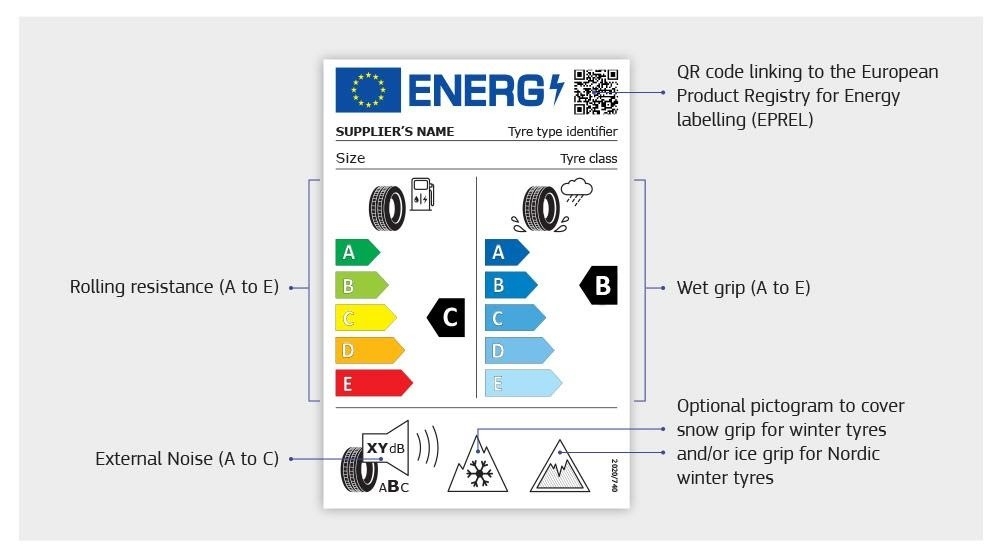
pic from the European commission
How will the EU tyre label help when I'm buying tyres from Tyroola?
When you shop for tyres from Tyroola, we have tyre pattern pages and reviews to help you choose the tyre for your driving needs.
The EU tyre label will be on hand to provide a few more details, plus the knowledge that the tyre's you are considering passed global tyre standards.
Help! I'm still a bit lost about which tyre to buy!
Don't worry. If you need even more details, reach out to us via email or on our social accounts (links at the bottom of the page), and we will offer you other information, recommendations and advice about which tyre to buy.
Frequently Asked Questions
What is the EU tyre label?
It's a standardised rating that scores a tyre on three things: fuel efficiency (rolling resistance), wet grip and external noise. It exists so buyers can compare tyres on economy, safety and noise at a glance, rather than relying on marketing.
What do the fuel efficiency and wet grip grades mean?
Both are graded A to E, with A best. A higher fuel-efficiency grade means lower rolling resistance and better economy; a higher wet-grip grade means shorter wet braking, because the tyre is tested for stopping distance on a wet surface. Even one grade of wet grip can mean several metres of braking distance.
What does the noise rating mean?
It shows external rolling noise in decibels, with sound-wave bars for the level. Fewer bars and a lower dB figure mean a quieter tyre, which matters for cabin comfort — especially on EVs and highway driving, where there's no engine noise to mask road roar.
Does Australia use the EU tyre label?
Australia doesn't mandate it, but many tyres sold here carry EU label data because they're built to global specs. It's a useful comparison tool even though it isn't a legal requirement locally — just remember it doesn't measure dry grip, handling or tread life.
Is an A-rated tyre always the best choice?
Not necessarily. The label only covers three measures, so an A-rated tyre could still fall short on dry grip, longevity or handling, which aren't shown. Use it alongside independent reviews and your own driving needs rather than as the sole deciding factor.
- The EU label rates fuel efficiency, wet grip and noise.
- A is best, E is worst.
- It doesn't cover dry grip, handling or tread life.
- Use it as one input, not the whole decision.